How to Grow on Instagram Without Reels
How to Grow on Instagram Without Reels
How to grow on Instagram without Reels in 2026. Carousels, photo dumps, caption SEO, and the posting rhythm that doubles follower growth.
TL;DR: Yes, you can grow on Instagram without Reels: Instagram head Adam Mosseri said on October 23, 2026 that some accounts grow “by just posting photos”, and Socialinsider’s data shows carousels edged out Reels on engagement in 2025 and again in the third quarter of 2026. Post three to five times a week, write keyword-rich captions that Google can index from professional accounts, and build each post to be sent to a friend, the signal Mosseri says Instagram weighs above comments. This guide is the full photo-only playbook.
I run into the same worry from photographers, artists, and quote-page owners constantly: if you refuse to dance for the camera, is Instagram growth even possible anymore? The honest answer in 2026 is yes, and the engagement data backs it.
Learning how to grow on Instagram without Reels starts with one shift in thinking. The algorithm now leans hardest on behavior, specifically how long people linger on a post and how often they send it to a friend.
Carousels and well-built photo posts can win both of those without a single frame of video. By the end of this you will have a concrete posting rhythm, a caption approach that doubles as SEO, and format tactics tuned for static content.
Can You Grow on Instagram Without Reels
Yes. Asked in an Instagram Stories Q&A on October 23, 2026 whether a photographer can grow without Reels, Instagram head Adam Mosseri said “there are definitely accounts on Instagram that grow without posting any reels by just posting photos.” Carousels can also earn all three signals Instagram ranks on most: watch time, likes and sends.
Socialinsider’s benchmark of 67.5 million posts from 579,000 brand accounts measured carousels at 0.55% engagement in 2025, ahead of Reels at 0.52% and single images at 0.37%. Carousels still led in the third quarter of 2026 at 0.50% against 0.48% for Reels, while single images rose from 0.33% to 0.35%.
Mosseri was candid in the same Q&A that people interact with video more, “but there’s still lots of people who like to see photos, and so we want to make sure we support them, too.” Socialinsider’s report still tells brands to use Reels “to maintain reach and relevance.”
The way I see it, the format panic was always misplaced. Instagram chases attention, and a carousel that holds someone for four slides signals more attention than a Reel they thumb past in a second.
Mosseri named the three signals that matter most for ranking in January 2025: watch time, likes per reach and sends per reach. For a carousel, the closest thing to watch time is how far people swipe and how long they stay on each slide, and Mosseri said sends are “slightly more important for unconnected content”, meaning posts shown to people who do not follow you yet. On October 23, 2026 he added that Instagram focuses “a lot more on finding reels and photos that you might send to a friend” than on ones you would only comment on.
There is a quieter reason static content stalled for so many people, and it has nothing to do with the format. If your reach suddenly dropped, the cause is usually originality or consistency, not whether you filmed a video.
Originality is now written into the rules for photos too. Since Instagram’s April 30, 2026 update, accounts that “primarily post unoriginal content in photos or carousel posts” are no longer shown where Instagram recommends content, extending the protection Reels got in 2024. Instagram says 75% of US recommendations now come from original posts.
Consistency is also the first thing to slip once you run more than one account, which is why some photo creators hand the posting schedule to automation tooling. SMTasker is one of the options built for Instagram, TikTok and Threads, running accounts on real Android devices with a trial before you pay.
For a single account, Kicksta works on the follower side instead: you pick accounts and hashtags in your niche, and it says followers from those audiences come to you. By mid-November 2026 its FAQ said a username was all it needed and that it made no follows or likes from your account, but it still doesn’t explain how those people come to follow you, so weigh that before you pay.
Can You Use Instagram Without Seeing Reels?
Not really, because Instagram has no setting that removes Reels from the app. The closest you get is the Following feed, which shows only accounts you follow with their Reels included, and the Your Algorithm panel, which changes the topics your Reels cover but not how many you see. Our guide to turning off Reels on Instagram walks through each of those controls and what they can and cannot do.
Instagram’s own head argues against switching the algorithm off. At a rare Australian press briefing on September 10, 2026, as the country debated laws on algorithm opt-outs, Adam Mosseri said engagement ultimately fell by as much as 50% on a chronological feed, though he shared no underlying figures, ABC News reported. If you came here to stop posting Reels rather than to stop watching them, the rest of this guide is for you.
Why Carousels Beat Reels for Static Creators
Carousels beat Reels for static creators because they led Instagram engagement in 2025, hold attention across several slides, and get a second-chance re-show that Instagram’s head has described as a carousel feature.
They are the single highest-leverage format if you are not making video.
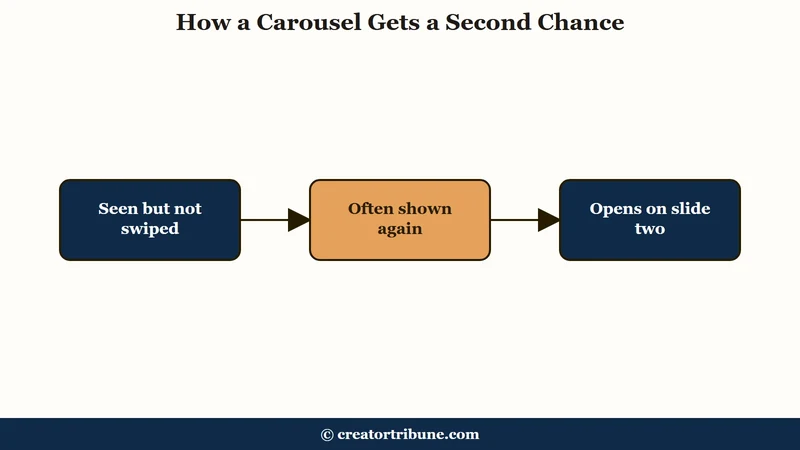
Carousels also get a built-in retry. Mosseri explained in a 2024 Reel that if someone sees your carousel but does not swipe, Instagram will “often give that carousel a second chance and automatically move to that second piece of media”, which is a real argument for putting your strongest image second, not first.
Mosseri made the same case on October 23, 2026, saying carousels “tend to do better than single photos because they get you multiple at bats that can show up multiple times for the same person.” He also suggested adding music to photo posts when it fits, since a more engaging post earns the likes and comments “which will help them get more reach.”
Mixing formats inside one carousel has paid off before. An older Socialinsider study of 22 million posts, published in 2020, found carousels that combined photos and video earned the highest engagement per post of any format it measured, though only 7% of carousels used the mix. A clip inside a carousel still counts as a carousel, not a Reel, so it stays inside a photo-first workflow.
Build each carousel to be sent first and saved second. A carousel built as a reference, a checklist, a before-and-after, or a mini-guide gets saved and sent, and sends are one of the three ranking signals Mosseri named.
Here is the carousel build I would copy on every post:
- Put your single strongest image on slide two, not slide one, so the second-chance re-show lands on your best hook.
- Make slide one a clear promise or title that earns the first swipe.
- Build the middle slides as a save-worthy sequence, like a checklist or a before-and-after.
- End on a slide that asks directly for the share or the save.
- Add music when it fits the mood of the post.
How Often to Post to Grow Without Reels
Post three to five times a week to more than double your follower growth versus posting once or twice.
Most stalled accounts are getting posting frequency wrong.
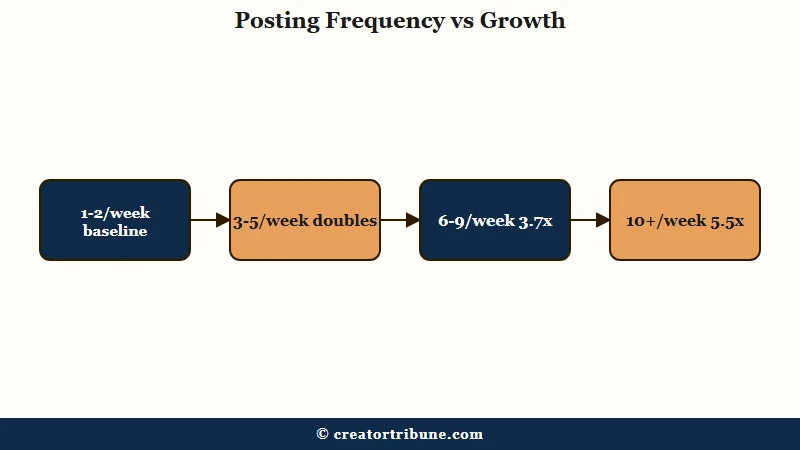
Buffer’s two-million-post analysis is the clearest data I have seen on this. Moving from one or two posts a week up to three to five more than doubles follower growth rate and lifts reach per post by about 12%. The study counted photos, carousels and Reels together, so the numbers describe posting frequency in general.
The returns keep climbing if you can sustain it. Six to nine posts a week showed a 3.7x growth rate and ten-plus hit 5.5x, though that pace burns most solo creators out fast.
Buffer’s data also shows a penalty worth respecting. Weeks where you post nothing pull growth measurably below your own baseline, so a steady three-a-week beats a burst of ten followed by silence. If your views crater after a strong run, that pattern is covered in viral then no views.
Posting often gets you seen, and turning viewers into followers is a separate job: our guide on how to get more followers on Instagram covers the bio, Collabs and follow-rate checks that decide it.
| Posts per week | Follower growth vs 1-2/week | Best for |
|---|---|---|
| 1-2 | Baseline (slow) | Hobby accounts |
| 3-5 | More than 2x | Sustainable growth sweet spot |
| 6-9 | 3.7x | Full-time creators with a backlog |
| 10+ | 5.5x | Teams or heavy batchers only |
Caption SEO and Hashtags Without Video
Captions are now a search asset, so put your main keyword in the first sentence and cap hashtags at five.
In a 2022 Hootsuite experiment of ten posts, keyword-rich captions earned about 30% more reach than posts relying on three to five hashtags, and the old 30-tag habit is dead.
Instagram announced a five-hashtag cap for posts and Reels in December 2025, Social Media Today reported, and Instagram’s hashtag help page now says “You can use up to 5 tags on a post.” If a single photo or video carries more than 5, the same page says “your comment won’t post”, so moving extra tags into the first comment buys nothing. Instagram framed the cap around “fewer (up to 5) more targeted hashtags, rather than many generic ones”.
Search now does much of the discovery work hashtags used to do. Since July 10, 2025, public posts from professional accounts, other than teen accounts, can appear in Google search results, so your caption and alt text are doing double duty as page-one SEO, not just in-app context.
Treat the first line like a headline a stranger would type. A landscape photographer should write “golden hour landscape settings for beginners” up front, not bury it under a personal story, since that opening line is what both Instagram search and Google read first. The same own-your-audience logic is why a link page you control is worth setting up early, before the next algorithm change moves the goalposts again.
Format Tactics for Photos, Art, and Quote Pages
Build static posts to be saved and sent, using narrative photo dumps, before-and-after breakdowns, and hyper-niche framing.
The tactic changes by page type, but the goal is always dwell time and shares.
For photographers and artists, I would lean on two structures. Use a 12 to 20 slide narrative photo dump for deep guides or a shoot story, and use a before-and-after flow where slide one is the before, slide two the after, and the rest explains what changed.
Here is the difference a small reframe makes on a single image post.
Before: A landscape photo captioned “Sunrise at the lake this morning.”
After: The same photo captioned “How I shot this misty sunrise: f/11, ISO 100, 1/60s, single exposure,” targeting a micro-community of beginner landscape shooters who save settings posts.
Quote pages play a different game. Skip generic motivation and pick a specific lane like Stoic discipline, which gets saved, or feminine empowerment, which gets shared, keep text readable in under a second on mobile, and add a small consistent logo watermark so reshares build your brand. Design every card yourself rather than reposting other pages’ graphics, because Instagram’s April 30, 2026 originality rule pulls accounts that mostly re-upload others’ work out of recommendations.
Whatever the page, reply to every comment in the first hour. That early engagement velocity signals depth to the algorithm, and it pairs well with a tight hashtag strategy and an understanding of why reach feels low even on good content.
Quick Takeaways
- You can grow on Instagram without Reels: Mosseri said on October 23, 2026 that some accounts grow by just posting photos. Carousels and photo posts can earn watch time, likes and sends, the three signals Instagram ranks on most.
- Carousels edged out Reels on engagement in 2025 and again in the third quarter of 2026 (0.50% against 0.48%), and Instagram often re-shows an unswiped carousel from slide two, so put a strong image there.
- Post three to five times a week to more than double follower growth, and never go a full week without posting.
- Cap hashtags at five, and lead your caption with the main keyword since public posts from professional accounts now index in Google search.
- Build every static post to be sent or saved, make the visuals yourself so Instagram’s April 30, 2026 originality rule does not cost you recommendations, and reply to comments in the first hour.