Why TikTok Creator Payouts Crashed After the Sale
Why TikTok Creator Payouts Crashed After the Sale
TikTok creator payouts cratered after the 2026 US sale. Here is how far RPMs fell, why it happened, and what creators should do about it.
- 1What Happened to TikTok Payouts After the Sale
- 2How Far Did Creator RPMs Fall
- 3Why Did Payouts Drop After the Ownership Change
- 4Will TikTok Payouts and Reach Recover
- 5Does YouTube Shorts or Instagram Pay More Now
- 6What Should Creators Do About the Drop
- 7Frequently Asked Questions
- Why did my TikTok RPM drop?
- Have TikTok payouts recovered in 2026?
- How much does TikTok pay per 1,000 views in 2026?
- Why do my videos under one minute earn nothing?
- Did the US sale change how much TikTok pays creators?
- 8Quick Takeaways
What Happened: TikTok creator payouts and RPMs cratered after the January 2026 US sale to the Oracle-led joint venture, with some creators reporting earnings a fraction of what the same views paid before. The acute crash did not hold: published rate guides had Creator Rewards back at $0.40 to $1.00 per 1,000 qualified views by late July 2026. A separate, structural squeeze on RPM continues, and it has nothing to do with the sale.
Dylan Page, who runs the News Daddy account to an audience of more than 15 million, said in April 2026 that his TikTok RPM had fallen to about $0.01, which works out to roughly $10 for a million views. Other creators publicly disputed his figure and offered competing explanations, so treat it as the loudest report rather than a representative one.
That is the number that captures the panic spreading through TikTok since the sale. Creators who built reliable income on Creator Rewards watched the same view counts pay a fraction of what they used to, seemingly overnight.
Most of the drop turned out to be a side effect of the algorithm retraining rather than a decision to pay creators less, and the numbers below now cover what happened next. This guide walks through how far payouts fell, why it happened, where rates actually landed by mid-2026, and the income setup that makes the next platform shock cost less.
What Happened to TikTok Payouts After the Sale
TikTok payouts dropped sharply after TikTok USDS Joint Venture LLC closed on January 22, 2026, in a deal valuing TikTok’s US business at $14 billion. The For You algorithm had to be rebuilt, and creator revenue fell with it.
Three managing investors hold 15 percent each, Oracle, Silver Lake and Abu Dhabi’s MGX, with ByteDance keeping a 19.9 percent minority stake and the remaining 80.1 percent sitting with American and global investors. The venture covers CapCut and Lemon8 alongside TikTok itself, so an editing workflow built on CapCut sits under the same ownership change.
The deal moved US user data onto Oracle’s cloud. To comply with the law behind the sale, TikTok began retraining its recommendation algorithm on US-governed data inside that cloud.
The financial side hit fast. Within weeks, creators across Reddit and the press were posting screenshots of Creator Rewards payouts collapsing, and Forbes reported creators citing lost functionality and missing payouts as they eyed the exits.
This is the money side of the same upheaval behind the platform’s privacy changes, and it is hitting full-time creators hardest. For anyone whose rent depends on Creator Rewards, a sudden RPM swing is not an abstraction.
How Far Did Creator RPMs Fall
Creators reported RPMs falling from around $4.00 to between $0.20 and $0.40, with individual monthly payouts dropping by hundreds or thousands of dollars. The swings were wild and inconsistent.
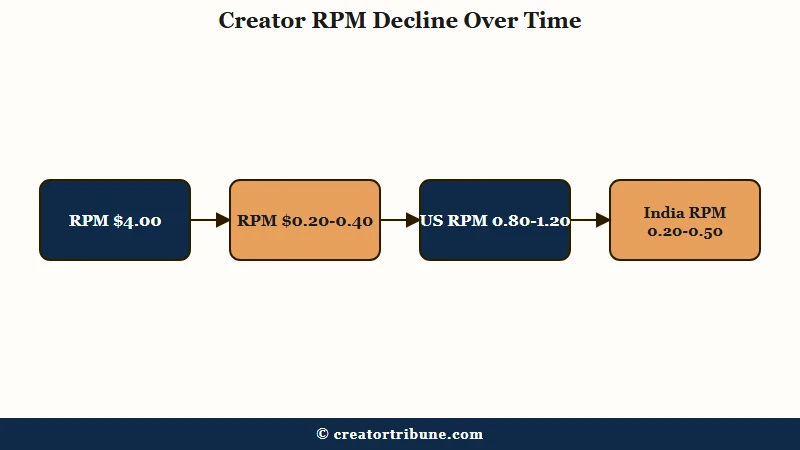
The specific numbers are what make this real. One creator reported a single month’s payout shrinking by about $7,000, another watched an expected $1,600 land at $1,000, and one estimate lurched from $243 down to $4 before bouncing to $46.
Even setting the worst cases aside, the typical 2026 ranges show why audience geography matters so much. Here is roughly where Creator Rewards RPMs sit by country for videos over a minute.
| Audience country | Typical RPM per 1,000 views |
|---|---|
| United States | $0.80 to $1.20 |
| United Kingdom | $0.70 to $1.00 |
| Canada and Australia | $0.60 to $0.95 |
| India | $0.20 to $0.50 |
The headline horror stories and the steady-state ranges are both true at once. Retraining made individual payouts lurch unpredictably, while the underlying rates stayed modest and audience-dependent.
Why Did Payouts Drop After the Ownership Change
Payouts dropped because the For You algorithm lost years of accumulated precision when it was retrained on a smaller US-only dataset, which cut reach and the revenue tied to it. It is a technical disruption, not a new pay policy.
The algorithm is the product, and its training data cannot be swapped without a rough adjustment period. The model that knew exactly who to show your videos to had to relearn that on a narrower set of signals.
Reach instability translates straight into revenue instability, since Creator Rewards pays on qualified views. Creators also reported service disruptions during the first weeks of the migration, which made the early period read as even more chaotic than the payout data alone suggests.
Creators described their old reliable hit signals no longer working, which is the classic symptom of a freshly retrained recommendation model. If your reach has gone erratic and you want to rule out a separate penalty, the guide on TikTok views collapsing after viral covers how to tell a normal slump from a restriction.
Will TikTok Payouts and Reach Recover
Yes, on the headline rate. Published rate guides put Creator Rewards at $0.40 to $1.00 per 1,000 qualified views as of late July 2026, well above the $0.20 to $0.40 floor from the worst weeks after the sale.
A March 2026 breakdown put US-audience RPMs at $0.40 to $1.50 per 1,000 qualified views. A second guide, updated through late July 2026, landed lower at $0.40 to $1.00 for most creators.
Both sit well clear of the crash figures, so the recovery is real. Note the direction between them though, because the later reading is the lower one.
The platform never cut the Creator Rewards rate card. The distribution that feeds it got scrambled, and as the retrained model matured the payouts followed it back up.
RPMs have been drifting down across 2026 for reasons unconnected to the ownership change. More creators qualified for the program are drawing on the same advertiser pool, a growing share of views arrive from countries that do not count as qualified, and ad spend swings seasonally.
The crash was temporary. The drift is not. Judge your own recovery on whether reach is trending back rather than on any single payout week, and plan around a rate that erodes slowly over time.
Does YouTube Shorts or Instagram Pay More Now
YouTube Shorts is currently the stronger structural payer despite a lower per-view rate, because it funnels short-form viewers into high-RPM long-form videos, while Instagram converts followers to sales better than it pays per view. Each platform wins at a different job.
The per-view math inverts here. YouTube Shorts pays a base RPM of only about $0.01 to $0.07, lower than TikTok’s qualified rate, yet it is credited with a 3x to 5x effective advantage because Shorts feed into long-form content that earns far more per view.
Instagram Reels can show a higher headline range of roughly $0.10 to $3.00 per 1,000 views, but that revenue leans on brand deals and direct selling rather than a stable payout program. The table below sums up where each platform fits right now.
| Platform | Per-view pay | Real strength |
|---|---|---|
| TikTok | $0.80 to $1.20 US, but volatile post-sale | Discovery and raw reach |
| YouTube Shorts | $0.01 to $0.07 base, 3x to 5x effective | Funnels to high-RPM long-form |
| Instagram Reels | $0.10 to $3.00, deal-dependent | Converting followers to sales |
One catch worth knowing: TikTok’s better RPMs only apply to videos at least a minute long, so the classic 15 to 30 second clips that built the platform often earn nothing.
What Should Creators Do About the Drop
Stop depending on TikTok payouts and build a discovery-to-conversion funnel that uses TikTok for reach, Instagram for relationships, and YouTube plus email for stable revenue. Diversifying beats waiting for the algorithm to settle.
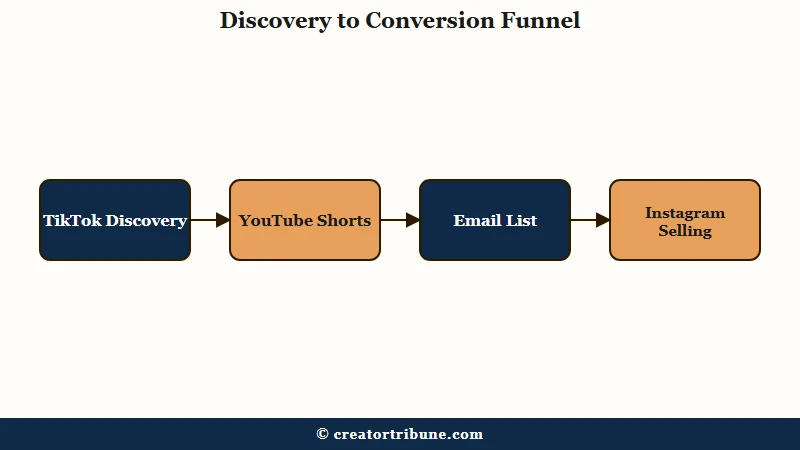
The migration is already happening, with creators cross-posting or pivoting through 2026 in large numbers, weighted toward YouTube Shorts and then Instagram Reels. No reliable count of how many exists, but the lesson driving it is consistent: TikTok dependence is the risk, not TikTok itself.
The setup worth building this month:
- Keep posting to TikTok for discovery, but stop treating Creator Rewards as your main income line.
- Re-edit your best clips for YouTube Shorts, do not just reupload, and use them to pull viewers toward long-form videos that pay far more.
- Funnel TikTok and Reels viewers to one place you control, ideally an email list, so no algorithm change can erase your audience.
- Use Instagram for the relationship and selling layer, where DMs and direct offers convert better than raw views pay.
Doing this well means owning clean master files and a real cross-posting habit. The guides on cross-posting without watermarks and on native uploads versus reuploads cover the mechanics, and the YouTube Shorts monetization breakdown shows where the durable money is. If your Creator Rewards application itself got bounced, the rejected Creator Rewards fix is the place to start.
Before: you rely on TikTok Creator Rewards as your main income and watch it crater during the retrain.
After: TikTok drives discovery, YouTube and email carry the revenue, and one platform’s bad month no longer sinks yours.
Frequently Asked Questions
Why did my TikTok RPM drop?
Two different things push RPM down and they need separating. The sale-driven crash in early 2026 came from the For You algorithm retraining on US-only data, which scrambled reach and the qualified views tied to it. Underneath that, RPM has been drifting down all year because more creators now qualify for Creator Rewards and share the same advertiser pool, and because views from countries outside the eligible list add reach without adding revenue.Have TikTok payouts recovered in 2026?
On the headline rate, yes. Published rate guides put Creator Rewards at $0.40 to $1.00 per 1,000 qualified views as of late July 2026, well above the $0.20 to $0.40 figures reported during the worst weeks after the January sale. The structural squeeze on RPM has not reversed, so expect a rate that recovers from shocks but drifts down over time.How much does TikTok pay per 1,000 views in 2026?
Roughly $0.40 to $1.00 per 1,000 qualified views for a mainly US audience as of late July 2026, dropping toward $0.20 to $0.50 for audiences in markets such as India. Only qualified views count, so total view count is a poor predictor of a payout.Why do my videos under one minute earn nothing?
Creator Rewards only pays on original videos that run at least one minute, and Duets, Stitches and Photo Mode content are excluded. The 15 to 30 second clips that built the platform generate reach but no Creator Rewards revenue, which is the single most common reason a high-view account sees a near-zero payout.Did the US sale change how much TikTok pays creators?
The rate card was not cut. The joint venture that closed on January 22, 2026 forced a rebuild of the recommendation system, and the resulting reach instability cut the qualified views that payouts are calculated from. The payout formula itself was left alone.Quick Takeaways
- TikTok payouts cratered after the January 2026 sale because the For You algorithm retrained on US-only data, not because the pay rate was cut.
- Reports during the worst weeks ranged from RPMs falling to around $0.20 to a creator losing roughly $7,000 in a single month.
- That floor did not hold. Published rate guides put Creator Rewards at $0.40 to $1.00 per 1,000 qualified views as of late July 2026.
- A separate structural squeeze continues, driven by more qualified creators sharing one advertiser pool and by unqualified international views.
- Build a discovery-to-conversion funnel: TikTok for reach, YouTube Shorts plus long-form for revenue, Instagram for selling, and email so you own the audience.